Contact us
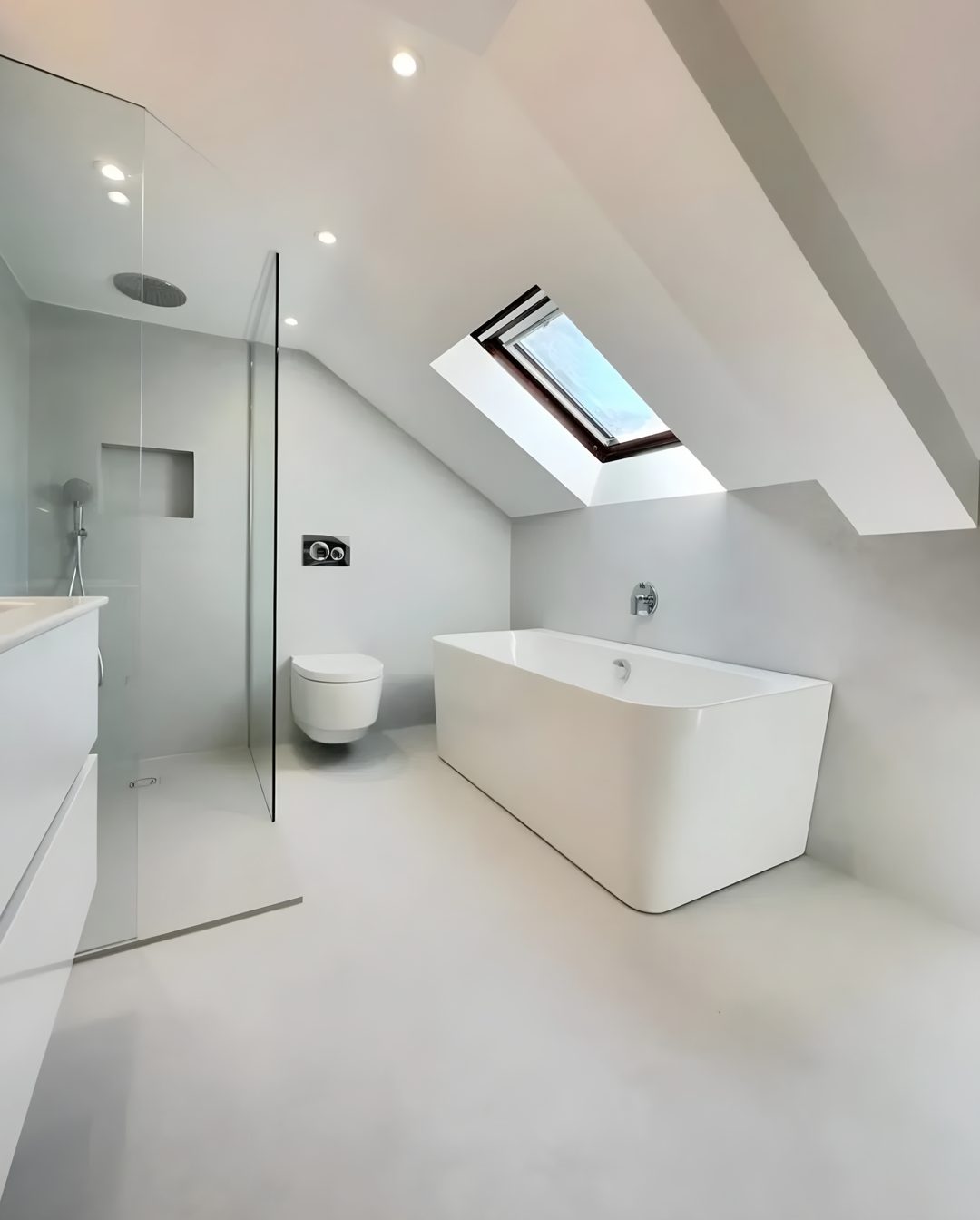
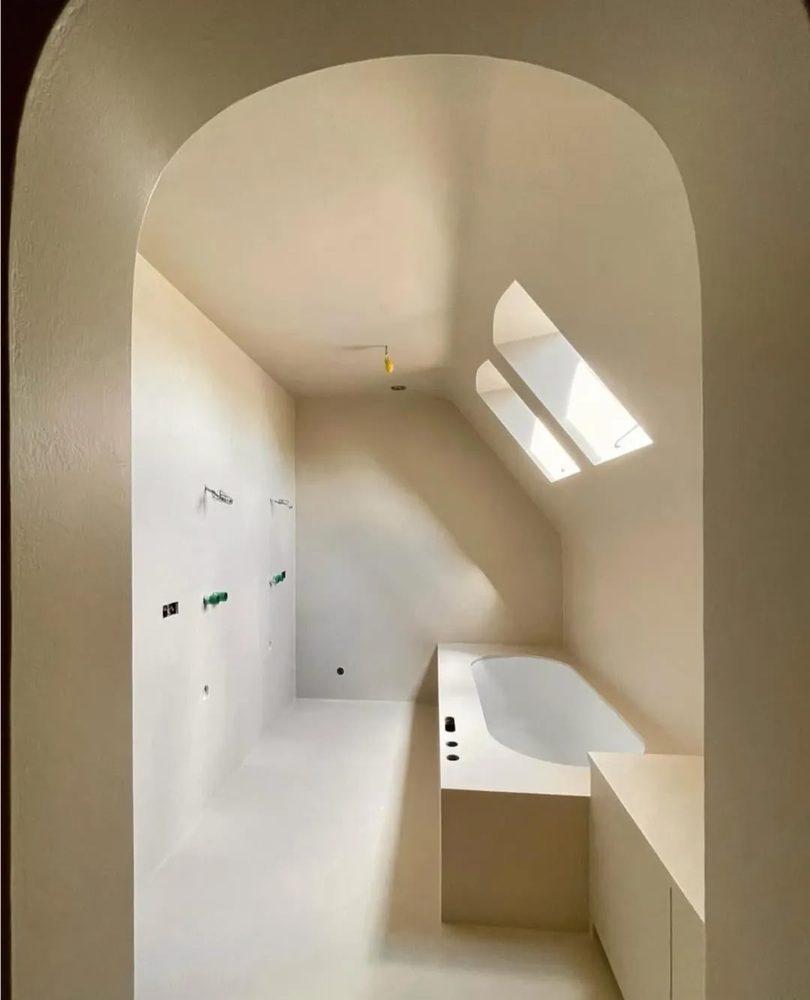
An attic bathroom under a sloped ceiling and skylight, with pale microcement running across the floor, walls and walk-in shower, and a freestanding tub.

Nantucket Microcement

Timeless Spaces. Nantucket Soul.

A thin, seamless cement finish for bathrooms and showers, kitchens and floors. Applied by a local expert with over 25 years in Nantucket surfaces.

Discover microcement
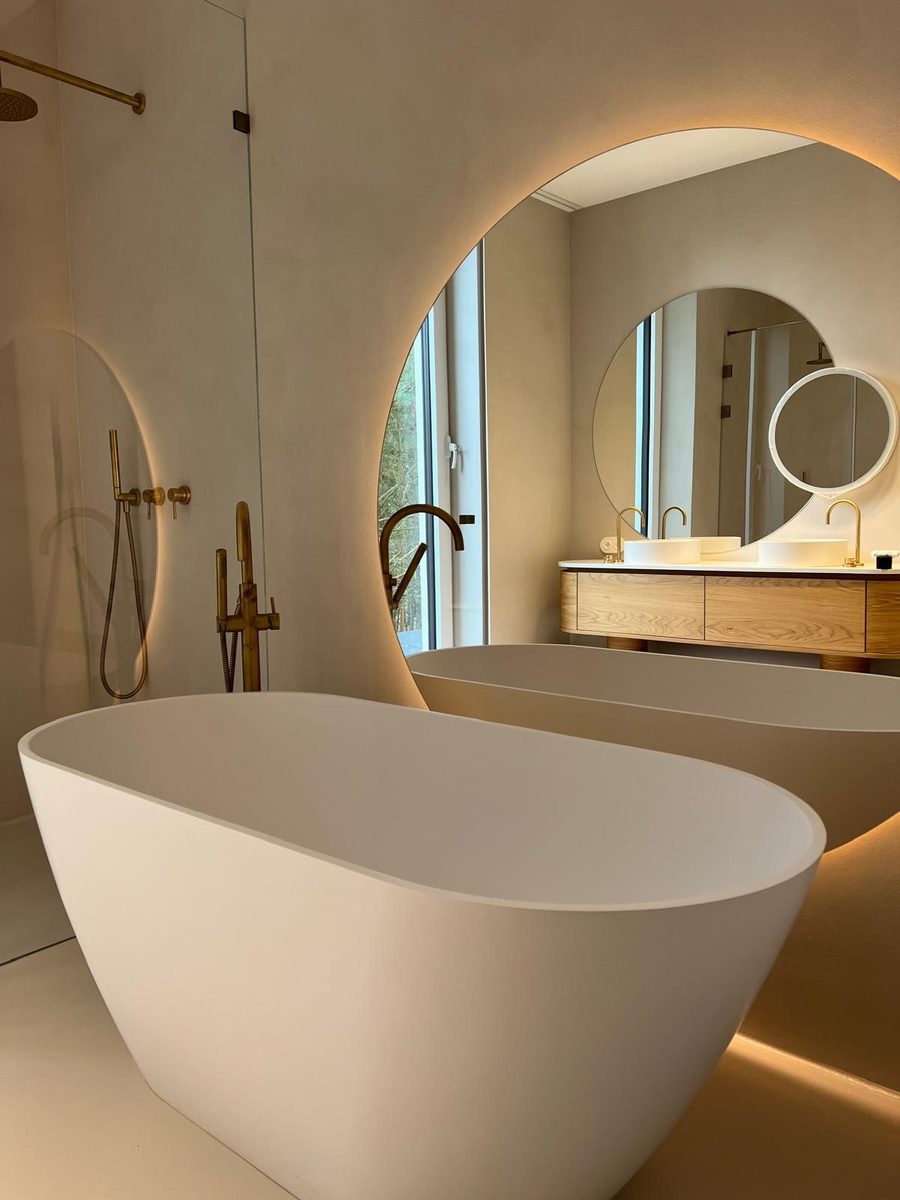
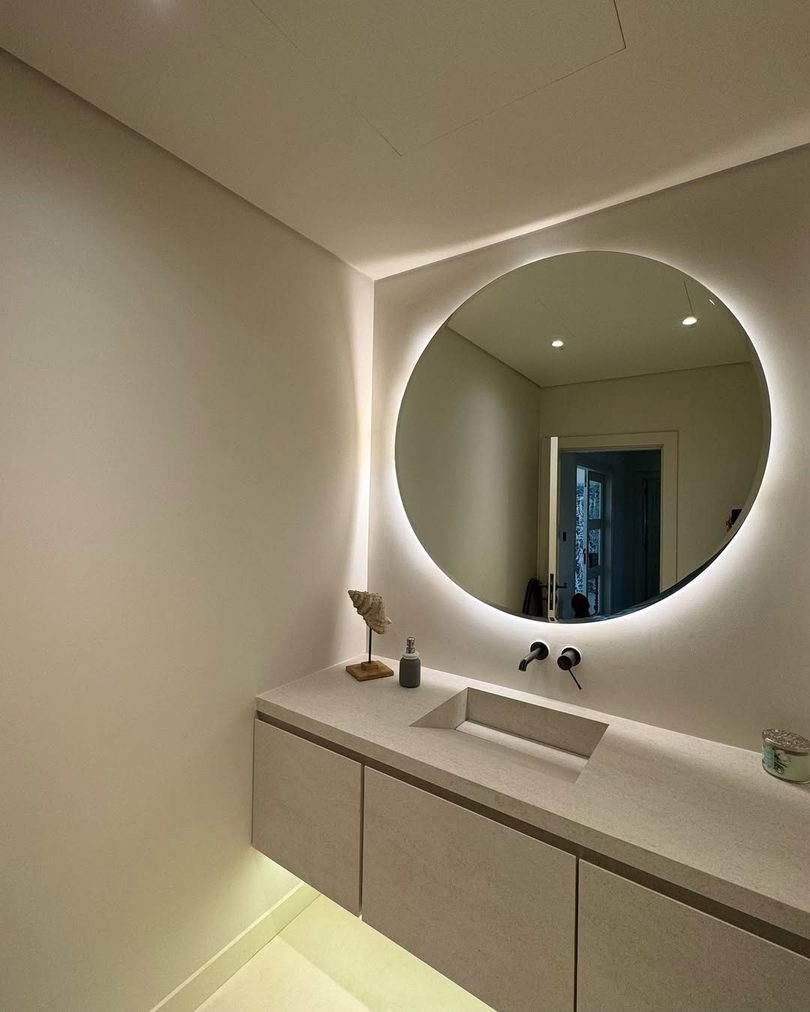
A bathroom with microcement on the walls and floor, a freestanding tub, and a round mirror lit from behind.

The choice for today’s Nantucket

Microcement is a cement-based finish troweled on by hand in thin coats. Floors, walls, showers and counters become one continuous surface, with no grout lines and no joints.

The look is calm and architectural, with a soft movement in the surface that only a hand-troweled finish has. It suits a new modern house and sits easily inside an older shingled one.

The whole system adds two to three millimeters over what is already there: sound tile, concrete or wood. Most rooms need little or no demolition.

We use PURO microcement by Atria, made in Sicily since 1968. A polyurethane topcoat seals it against water and stains. It is UV stable, so it does not yellow in a sunny room, and it comes in matte, satin or gloss.

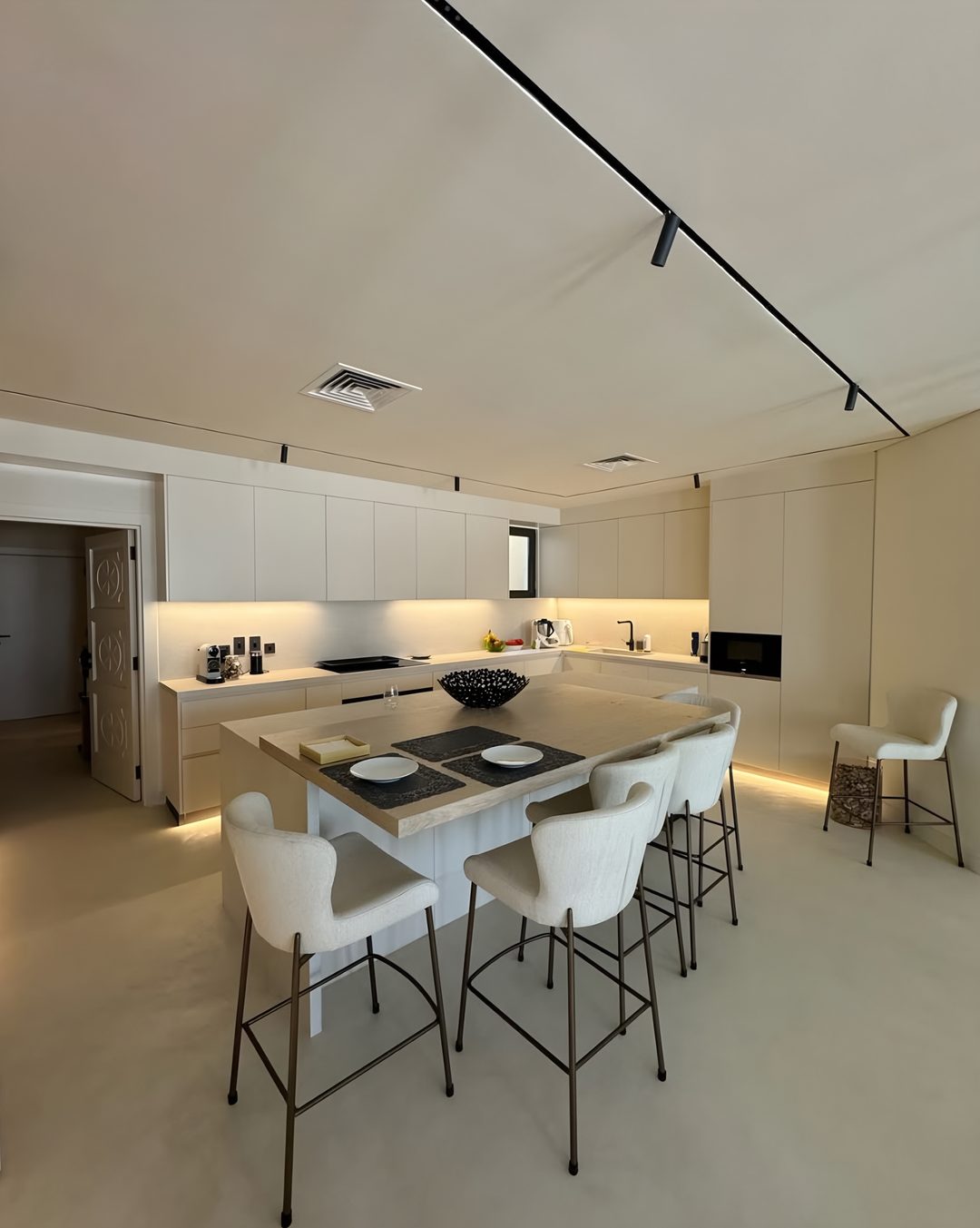
A pale kitchen with a microcement floor, an island set with bar stools, and warm light under the cabinets.

Kitchens and countertops

Counters, island, backsplash and floor can share one finish, and the floor runs on into the rooms around it.

The sealed topcoat resists stains and wipes clean with water and a pH-neutral cleaner. Use a trivet under hot pans and a board for cutting.

Floors and stairs

One floor from the front door through the kitchen and up every tread of the stair. No thresholds, no grout lines and nothing for beach sand to settle into.

It goes on a new slab or over an old floor that is sound and flat. The finish follows what is under it, so the base is prepared first.

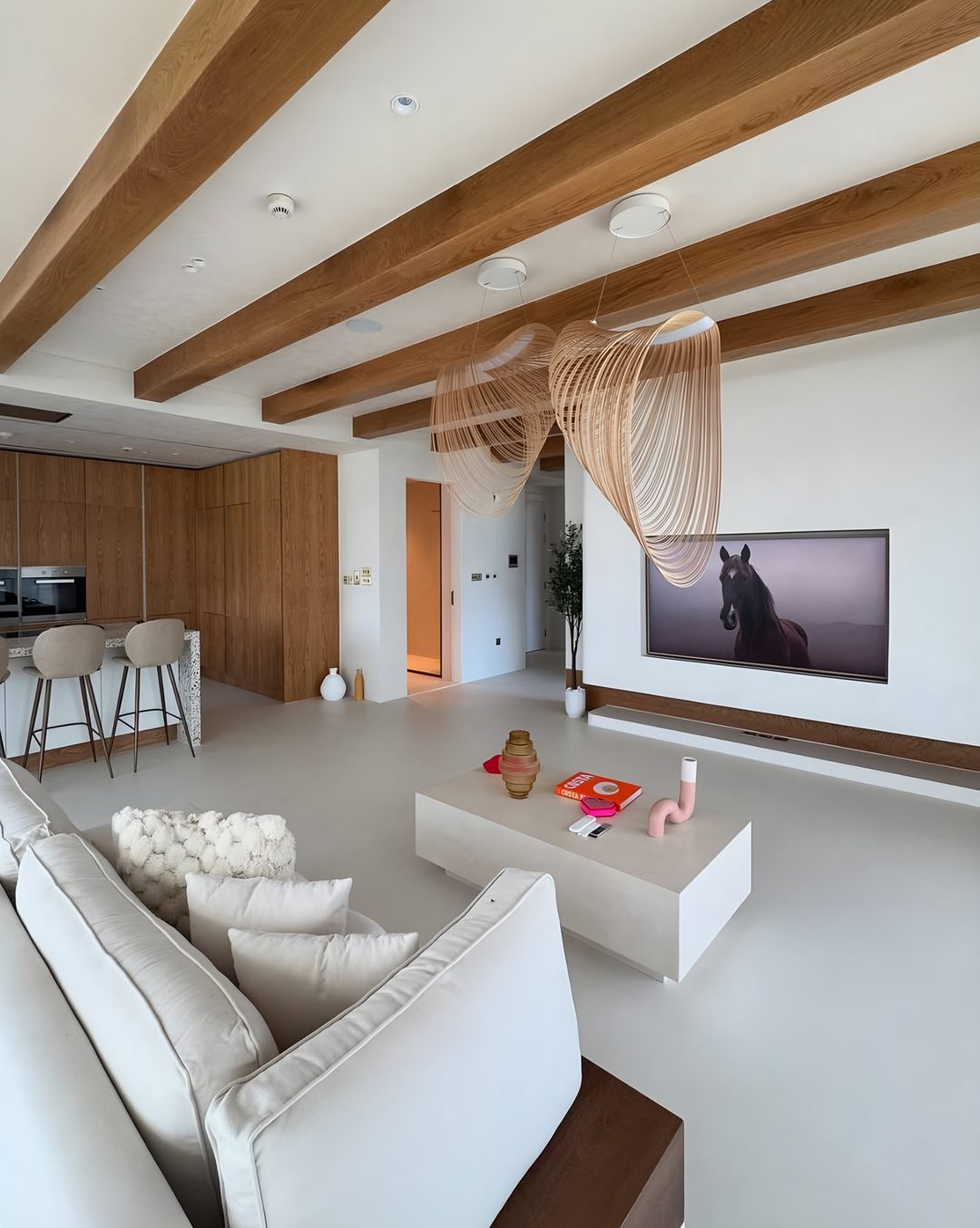
An open living room and kitchen under oak beams, with a pale microcement floor running through both.

Why microcement

Waterproof
In a shower, a waterproofing membrane goes on under the finish and a sealed topcoat over it. On vanities and counters, the topcoat keeps out splashes and spills.
Durable
A hard cement surface for floors, stairs and counters in daily use.
Low maintenance
No grout to scrub. Water and a pH-neutral cleaner do the job. Atria puts a fresh topcoat at every five to eight years.
Endless designs
Light or dark, smooth or textured, matte, satin or gloss. Colour is mixed to order, and mineral flakes can give a stone look.
Thin
Two to three millimeters over what is already there, so doors and fixtures rarely need to change.
Quick
Days rather than weeks. Atria puts a typical bathroom at four to five working days.

Made in Italy

Atria, made in Sicily

Our microcement is made by Colorificio Atria, a family company in Partanna, Sicily. The Atria family opened a small artisan paint workshop there in 1968.

Today it runs a 10,000 square meter plant with its own research laboratory. The second generation leads it and the third works alongside. Its finishes are used in more than 80 countries.

Every product is made in Italy to Atria’s own formulas, under ISO 9001 quality and ISO 14001 environmental certification. The coatings are water based and low in VOCs.

Atria USA, in Dallas, is the company’s exclusive partner in the United States and our supplier.

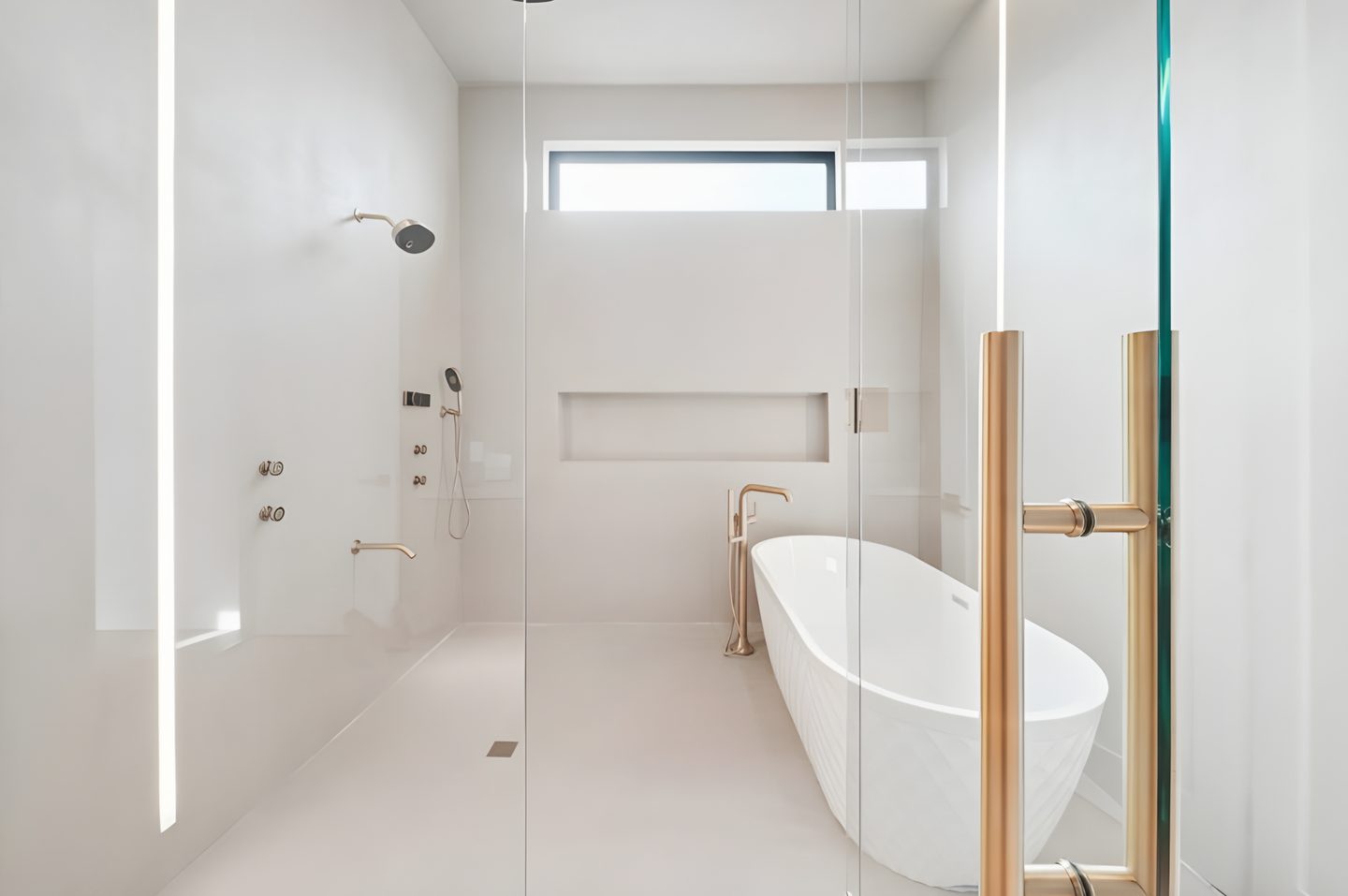
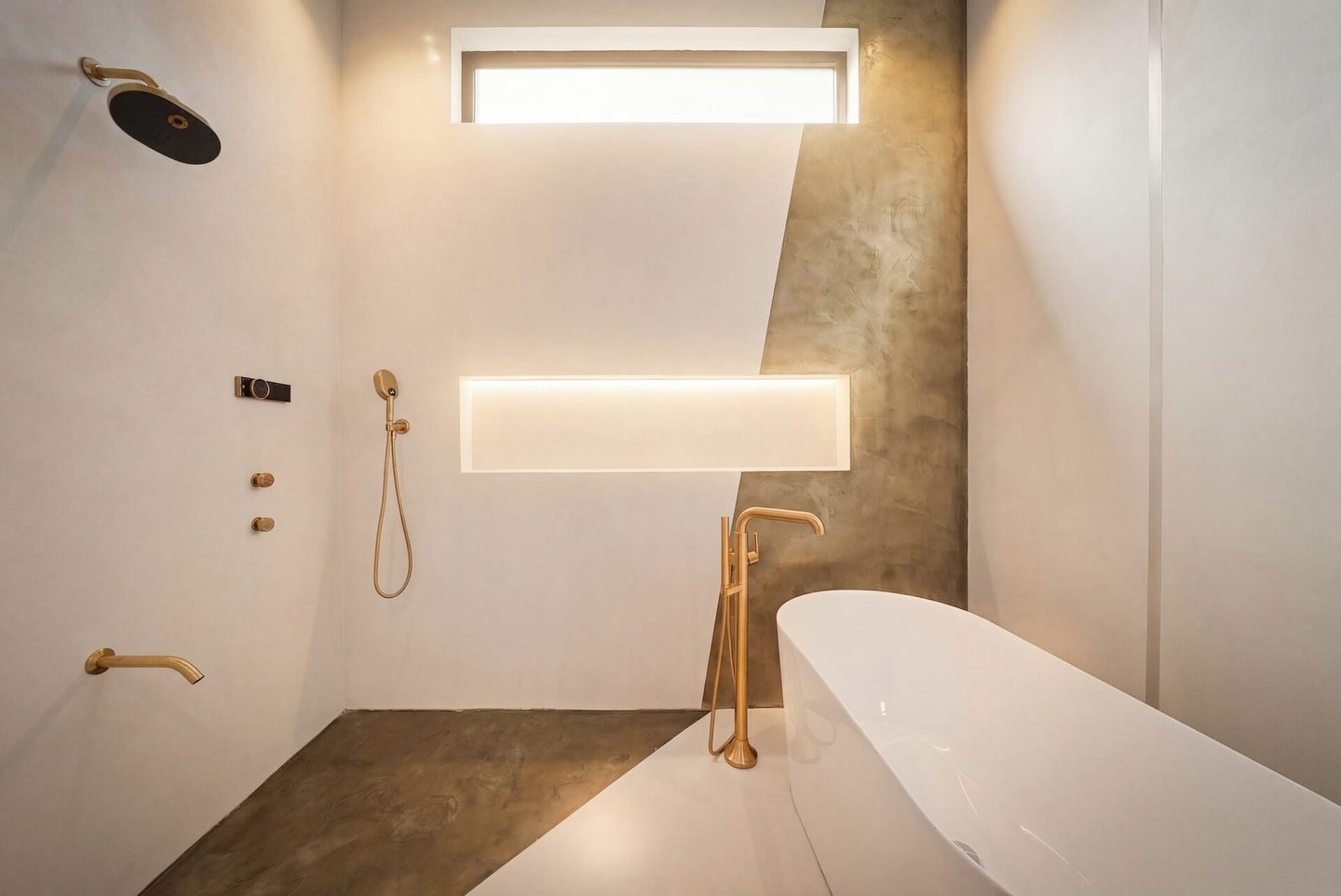
An Atria USA project in Dallas, a bathroom finished in Atria microcement: white walls and floor with a band of bronze-toned microcement running up the wall and across the shower floor, a lit niche, a freestanding tub and brushed gold fittings.

More finishes from Atria

Alongside microcement, we apply two more of Atria’s Italian wall finishes: limewash, and the Metallicum collection of real metal and real rust.

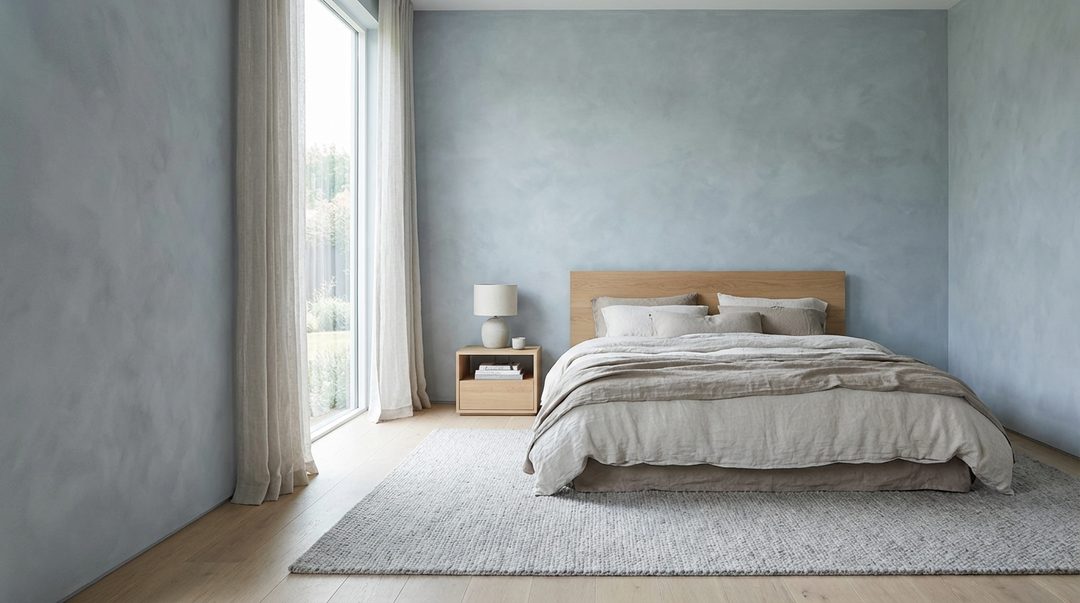
A calm bedroom with walls in pale blue Atria limewash, its soft cloudy brushwork catching the daylight from a tall window, an oak bed and nightstand and a grey wool rug.

Italian limewash

Limewash

Italian limewash, perfected over centuries. Handcrafted in Sicily with mineral pigments and applied by brush for the authentic, lived-in character that only real limewash can create.

A breathable mineral finish for bedrooms, living rooms and kitchens. It develops character over time, and every wall is unique. For interior and exterior walls, over drywall, plaster, brick and stone.

Sixteen best-selling colors inspired by the Italian landscape, plus custom matching to a RAL, NCS, Pantone, Benjamin Moore, Sherwin-Williams or Farrow & Ball color, or a physical sample.

Real metal and oxidation

Metallicum

Not imitation. The real thing. Liquid metal and chemical oxidation, specialty finishes that push the boundaries of what walls and surfaces can be.

Metallicum is 50% real metal: walls that gleam, age and patina like the real thing, because they are. Wild Rust is real oxidation and real patina, the drama of corten steel on any surface, inside or out.

A restaurant bar whose back wall and ceiling are finished in Atria Metallicum Copper, glowing under amber pendant lights above a walnut counter and tufted leather stools.
Metallicum Copper on a bar’s back wall and ceiling.
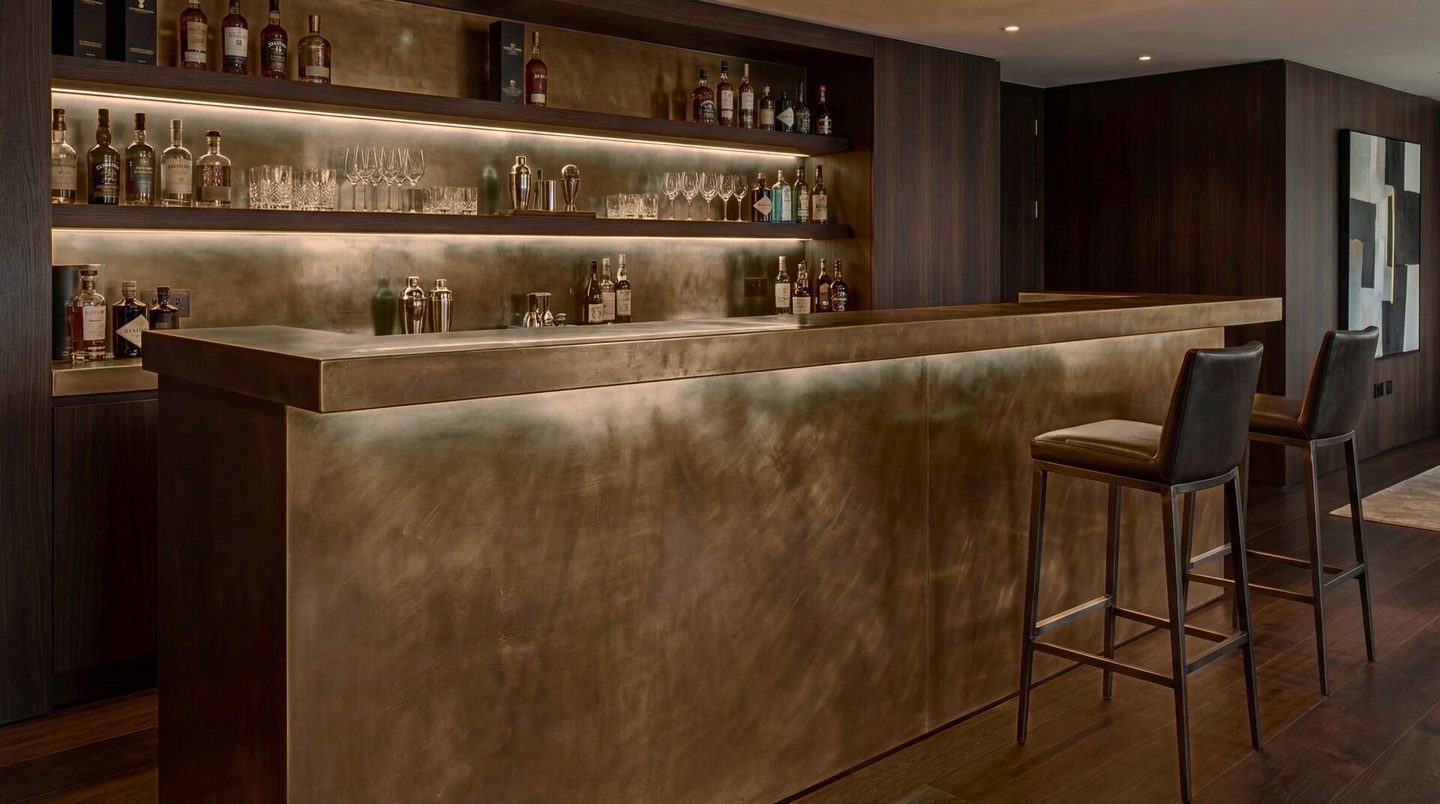
  • A home bar with its counter front and top finished in Atria Metallicum Brass, a brushed champagne-bronze sheen lit from beneath, with dark leather stools.

    Metallicum Brass

    Liquid brass effect

    Muted champagne-bronze finish with a soft olive cast and fine brushed metallic shimmer. Real powdered brass particles (copper-zinc alloy) create a surface that shifts from smoky bronze in shadow to soft champagne-gold where light catches.

    Interior walls

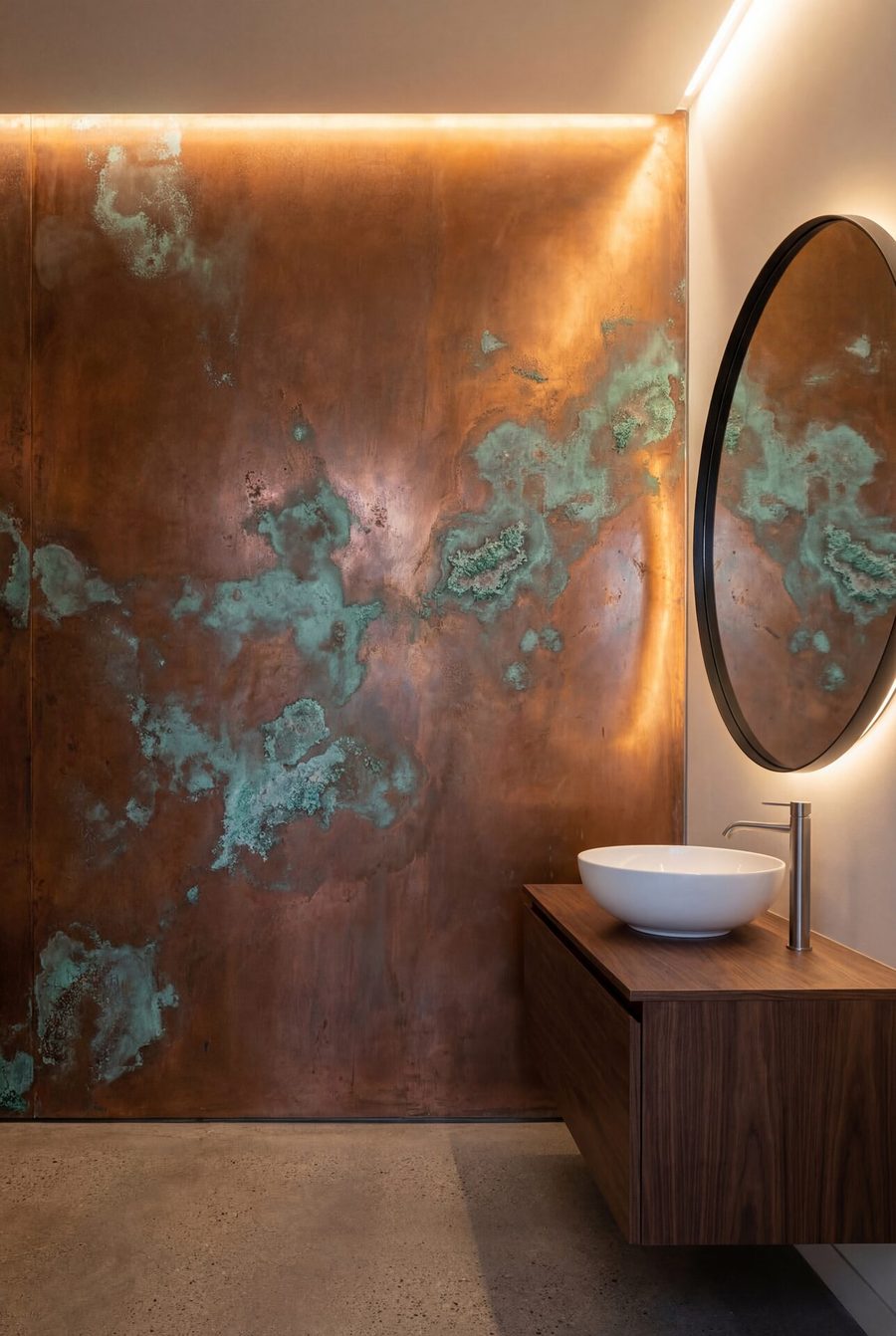
  • A powder room wall in Atria Wild Rust Copper, warm copper-brown with drifts of turquoise verdigris, beside a round mirror and a white vessel sink.

    Wild Rust Copper

    Copper oxidation effect

    Water-based decorative paint containing real copper particles. Once activated, it develops authentic verdigris patina, from subtle copper-green hints to a dramatic turquoise-teal takeover.

    Interior and exterior walls

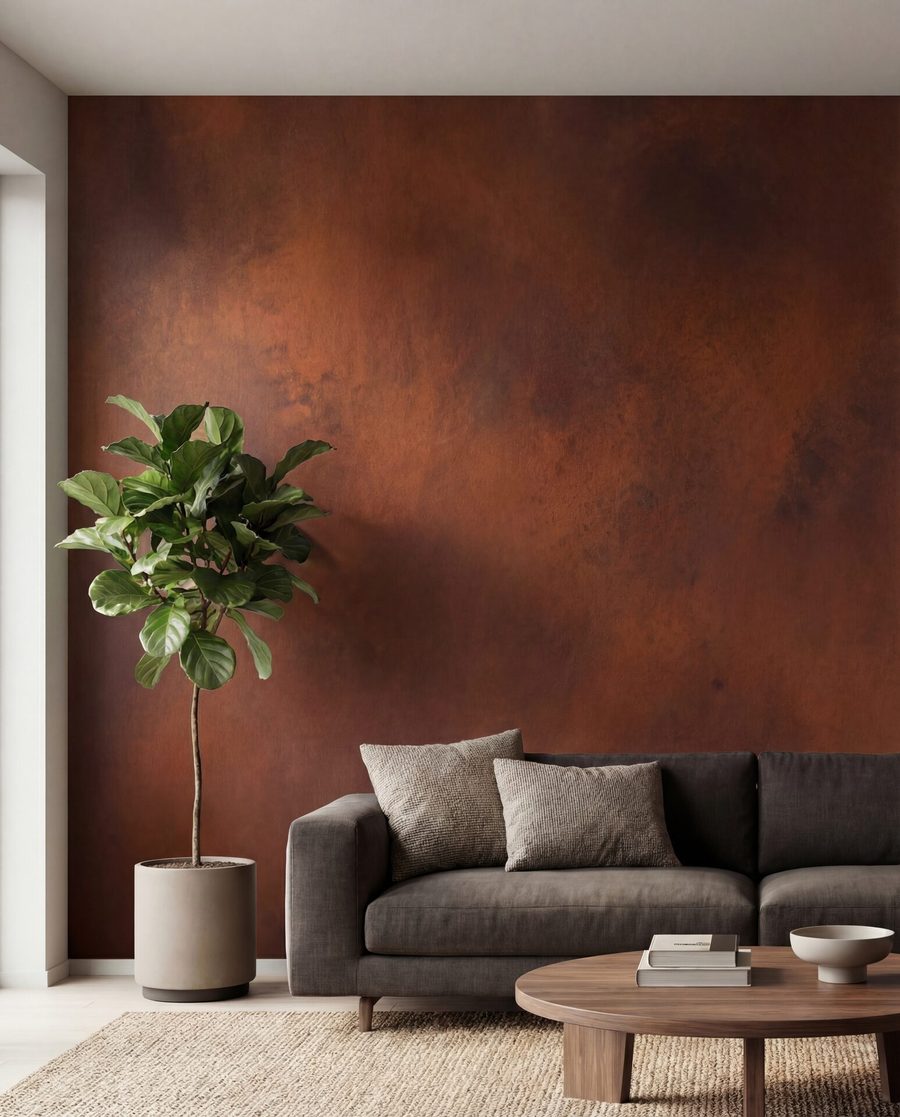
  • A living room wall in Atria Wild Rust Iron, a deep rust-brown with mottled corten tones, behind a charcoal sofa and a potted fiddle-leaf fig.

    Wild Rust Iron

    Iron oxidation effect

    Water-based decorative paint containing real iron particles. Once activated, it undergoes genuine chemical oxidation, creating authentic rust and corten effects.

    Interior and exterior walls

Finish photographs and descriptions courtesy of Atria USA, lightly edited: limewash and specialty finishes.

Where it goes

  • Bathrooms and showers.
  • Kitchens and countertops.
  • Floors.
  • Walls.
  • Fireplace surrounds.
  • Stairs.
  • Custom finishes.

Based on Nantucket. Serving Nantucket, Cape Cod and the South Shore. Renovations and new builds.

Common questions

  • Can it go over my existing tile?

    Often, yes. If the tile is sound and well bonded, it stays in place as the base. The joints are filled level, a primer goes on, then the microcement. The finished system adds two to three millimeters. Loose or hollow tile comes out first.

  • How is it cleaned and maintained?

    Like a sealed stone floor. Sweep or vacuum, then mop with water and a pH-neutral cleaner. Skip bleach, acids and abrasive pads. They wear the topcoat. The topcoat is what protects the surface, and Atria puts a fresh coat at every five to eight years, sooner on a busy floor.

  • Is a microcement shower floor slippery?

    Atria adds an anti-slip additive to the topcoat for shower floors, and a matte or satin sheen grips better than gloss. We can show you a sample wet before you choose.

  • How does it handle heat near a range or a fireplace?

    The cement itself does not burn; the sealer on top is the limit. Directly behind a cooktop and at the firebox opening, we use tile or stone, as Atria recommends for those hot spots. Microcement runs up to them and across the rest of the wall, the hood and the fireplace surround. On a counter, put a trivet under a hot pan.

  • Will it crack?

    Microcement is slightly flexible, but it is thin, so it follows what is under it. A crack or movement in the base can show through. That is why loose tile, movement and damp are fixed first, and why a shower gets a waterproofing membrane under the finish.

  • How long does the work take on site?

    It depends on the area and on the base. The finish goes on in several thin coats, each one drying before the next, then the topcoat cures. Atria puts a typical bathroom at four to five working days. Plan for the room to be out of use until it is done. On a new build, it goes in late, after the dusty trades.

  • How long does it last?

    Atria estimates fifteen to twenty-five years for the finish, with the topcoat refreshed along the way. A powder room asks less of it than a kitchen floor by the beach door.

Architects and builders can call with drawings.

Made for coastal homes

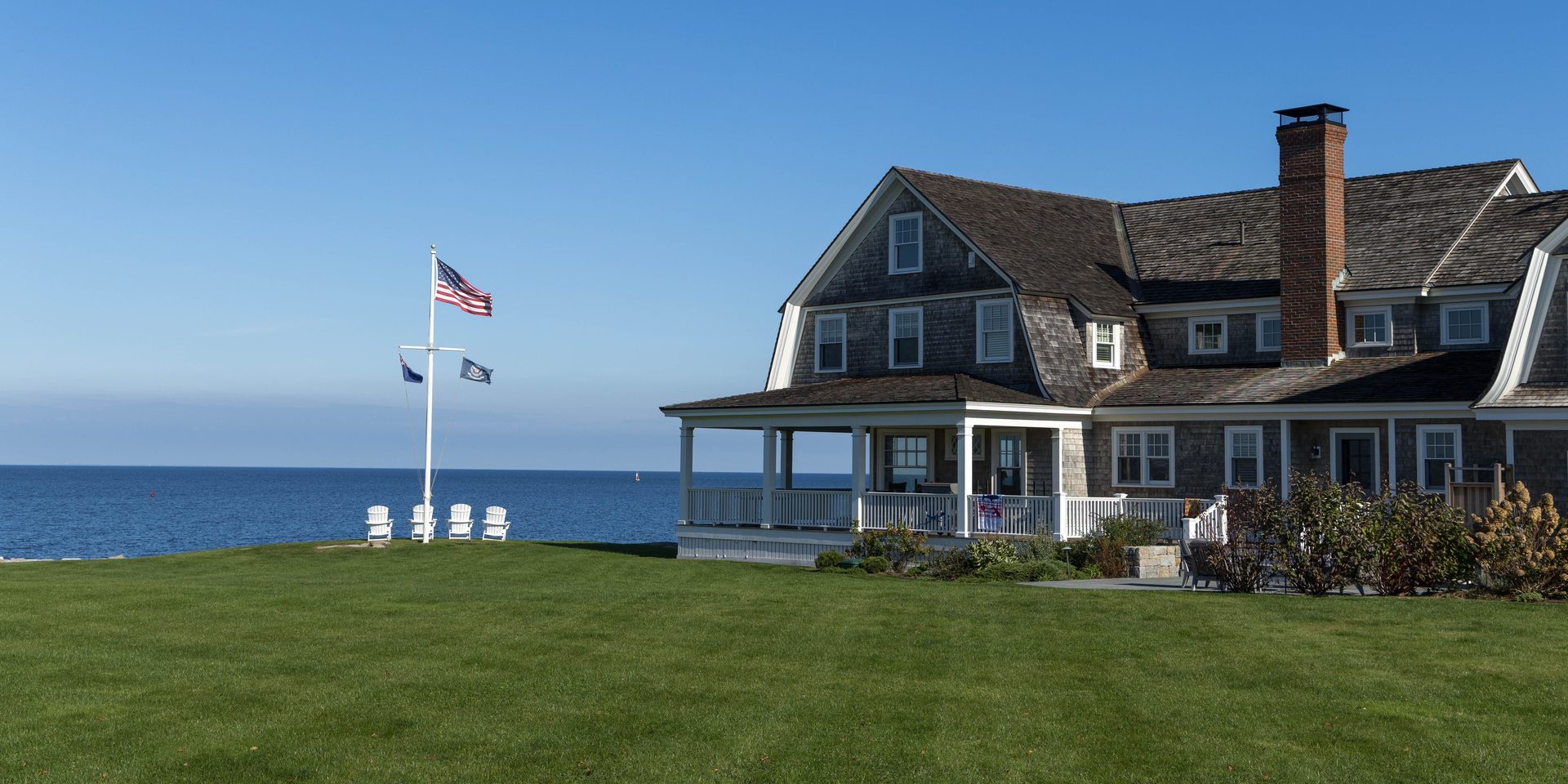
A shingled house with a wraparound porch on a wide lawn above the sea, with a flagpole and four white Adirondack chairs at the water’s edge.
Photograph by philevenphotos on Pexels.
Renovations
It can go over sound existing tile, so the old bathroom does not have to come out. Less demolition, and less debris to haul off the island.
New builds
One seamless surface from floor to wall to shower. Specify it early. It goes in late, after the dusty trades.
Summer houses and rentals
No grout lines to scrub between guests. A damp mop and a pH-neutral cleaner keep it ready for the season.
Sand and sun
A floor with no joints sweeps clean of beach sand, and the topcoat does not yellow in strong summer light.

About our founder

Alvaro Soares has worked in the Nantucket trades for 25 years, surfacing some of the island’s finest homes.

He knows how island houses are built and how they weather, and what a summer of guests and beach sand asks of a floor. Microcement lets him bring that experience to a seamless, modern finish.

Request a quote

Tell us the room, the rough size and where the house is. Photos or drawings help.